Current research projects:
Coming soon …
Past research projects:
1. Baby Skin Integrity Comparison Survey (BaSICS) study
 I worked as a post-doctoral research fellow at the University of Salford in 2017-18 on the Baby Skin Integrity Comparison Survey (BaSICS) study, which using a prospective randomised maternal observational design comprising of three cohorts collected data from approximately 700 new mothers on their baby’s skin condition at one nappy change per day, until their baby is 8-9 weeks old. The participants (mothers) were recruited in late pregnancy from three NHS sites in Greater Manchester. My role in this project included (and was not limited to) designing parts of the study and appraising it all, creating the majority of the study materials and applying for NHS ethical approval, which was successfully received without any amendments required. I also worked with a developer to ensure the design of the digital data collection app and website meeted ours and the prospective users’ needs and requirements, and I was responsible for the user testing phases too. I also supported the three data collectors on our research project on a day-to-day basis. This included training them on how to effectively collect data from participants, taking into consideration academic rigor, quality and ethical requirements. I also designed and ran training sessions for them on topics such as how to conduct qualitative interviews, cognitive interviews, effective recruitment, the role of ethics and researcher safety.
Whilst in this role, I was also a member of the Health Research Ethics panel at the University of Salford, and I reviewed approximately two applications per month. I was also an Expert Reviewer for National Institute for Health Research (NIHR); and on the Editorial Advisory Board for Cambridge Scholars (an academic publication house).
2. Online patient feedback (OPF): awareness, usage and attitudes among patients and general practitioners in England (PhD research)
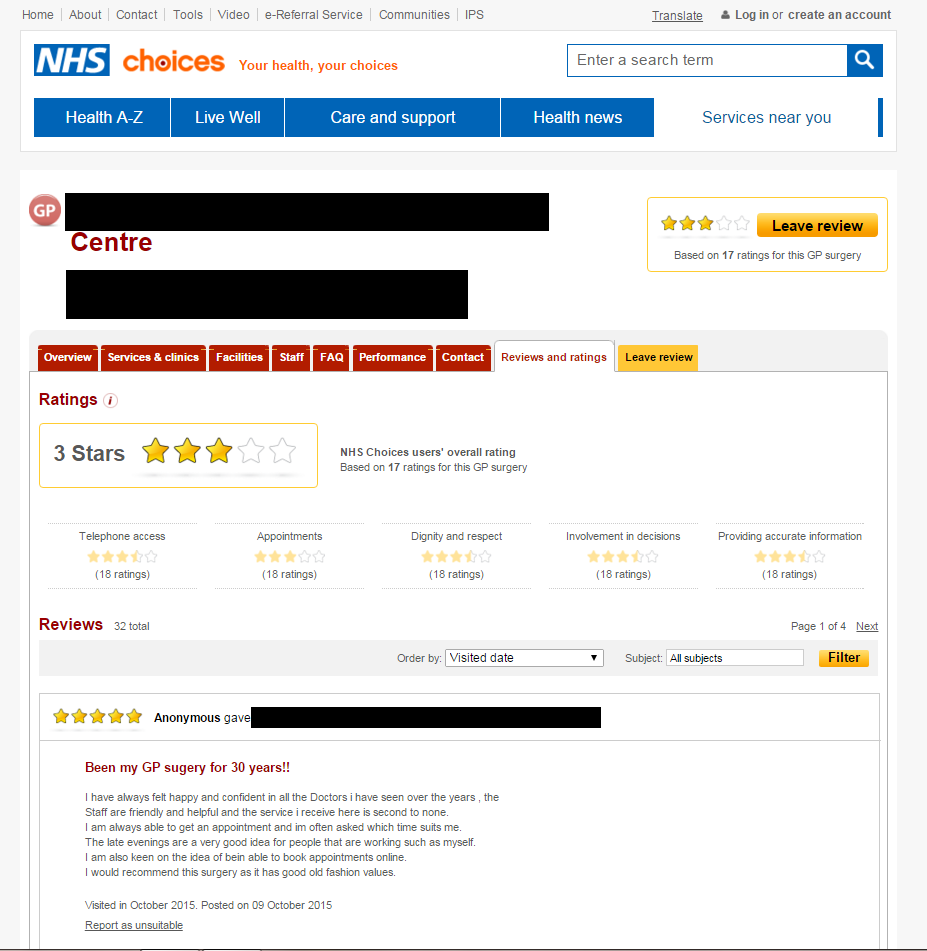 Very little is known about patients’ and healthcare professionals’ attitudes towards online patient feedback (OPF) websites. A multi-phase mixed method design was therefore used in this research to explore patients’ and GPs’ awareness, usage and attitudes about OPF websites as a mode to give feedback about GPs in England. The findings from this research produced evidence both for and against OPF websites, suggesting that GPs are highly concerned about the impact of these websites on them, on their professional practice, their reputation and their patients, and are not currently using OPF for improvement. Patient usage and future intention to use OPF websites was also found to be extremely low when compared to other methods of feedback, suggesting that unlike direct methods of feedback, OPF websites currently only appeal to a very small minority of patients. However, there was evidence to suggest that OPF websites fulfil a ‘feedback gap’ for patients, and unlike other feedback methods, span age, social and regional divides. (This is my PhD research project, and therefore all aspects of the project were conducted by me).
The detailed abstract of this entire research project can be found here.
The findings from this research project have been published at the Journal of Medical Internet Research in the following papers:
- General Practitioners’ Concerns About Online Patient Feedback: Findings From a Descriptive Exploratory Qualitative Study in England
- Exploring Patients’ Views Toward Giving Web-Based Feedback and Ratings to General Practitioners in England: A Qualitative Descriptive Study
- Public Awareness, Usage and Predictors for the Use of Doctor Rating Websites: A Cross-Sectional Study in England.
3. Public health projects
 I worked in a voluntary capacity with the City & Hackney Public health team on multiple health projects. I assessed the health needs of men aged 20-40 by conducting a systematic literature review and analysing results of survey and GP-patient data. I also produced a report after conducting a literature review assessing childhood injuries in the Charedi Jewish community, which was presented to the City & Hackney CCG. I also attending high level meetings, such as the Hackney Obesity Strategic Partnership meeting.
I also worked with the Public health Immunisation Team at NHS England, where I conducted an evaluation of the London Shingles Awareness Week Action Plan, which was commended to be excellent and presented to the board. I also attended senior management meetings, and shadowed senior leaders.
4. Use of text messaging to collect real-time feedback from healthcare users about the healthcare environment (in collaboration with the Royal Free Hospital in London)
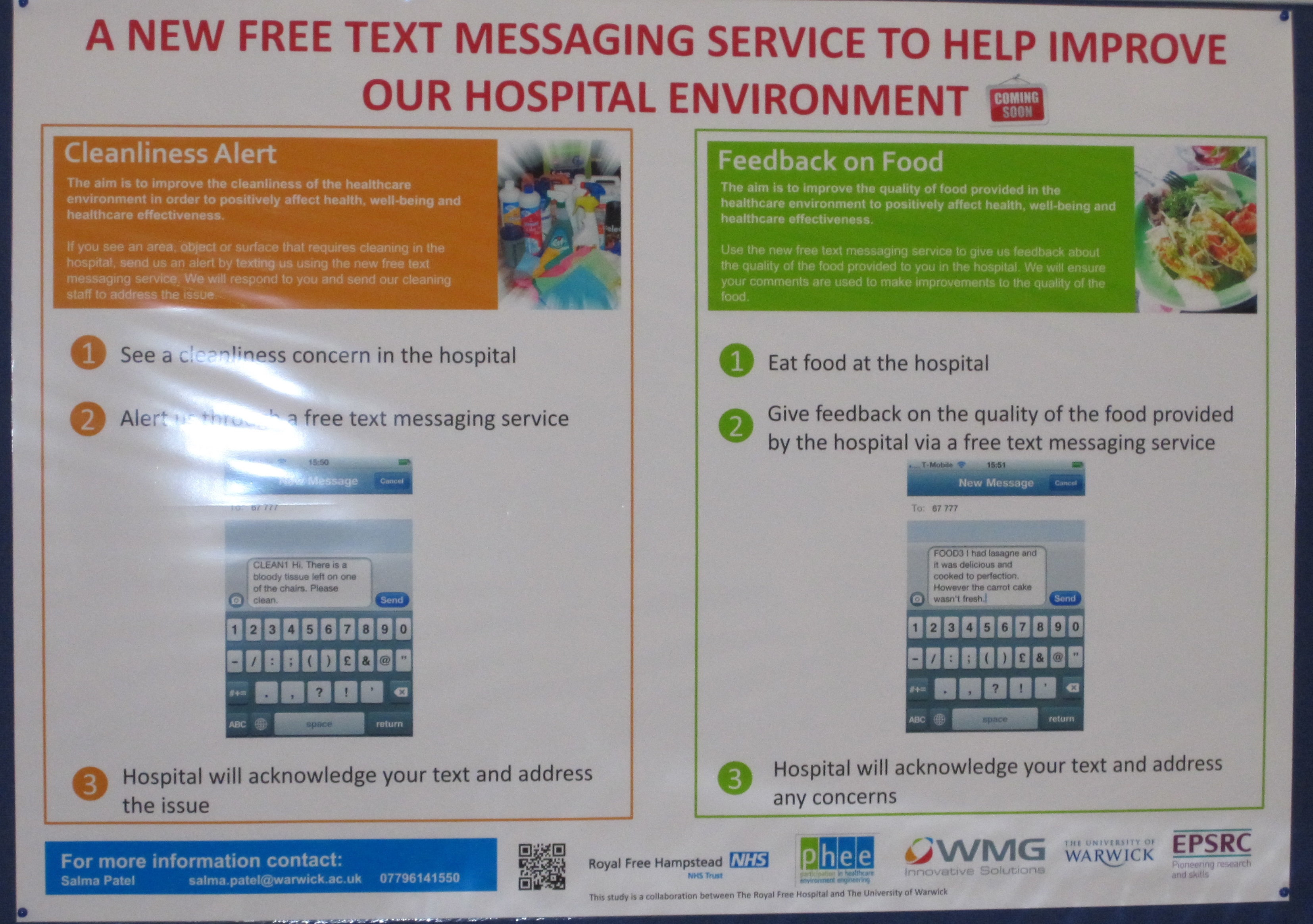 We proposed the use of text messaging as a real-time technological method to collect feedback from healthcare users about the healthcare environment. Healthcare users (whether that is patients, carers, visitors or staff) were offered the option to use a free text messaging service to give feedback about the cleanliness of the environment and food that is provided within the Royal Free Hospital. Further details are here.
5. Why and for what purposes do PhD students use Twitter and how can it benefit them? (Pilot study)
 This pilot study was conducted along side a colleague exploring the tweets from PhD students in 2012-13 and analysing them using content analysis.